Inventory Management: Why Process Governance Matters More Than Inventory Tracking Alone
Inventory management is one of the most critical functions within any business that handles physical goods. Whether operating in retail, manufacturing, distribution, automotive, healthcare, or e-commerce, organizations rely on accurate inventory records to support daily operations and long-term growth.
Most businesses recognize the importance of knowing what inventory they have, where it is located, and when replenishment is required. As a result, many invest in inventory management systems to improve stock visibility and operational efficiency.
However, inventory accuracy is not solely determined by software capabilities. In many organizations, inventory discrepancies arise not because the system lacks features, but because business processes are not properly governed. Unauthorized stock adjustments, uncontrolled inventory transfers, incomplete approvals, and inconsistent exception handling can undermine even the most advanced inventory management platform.
This is why successful inventory management requires more than inventory tracking. It requires strong process governance and enforcement.
What Is Inventory Management
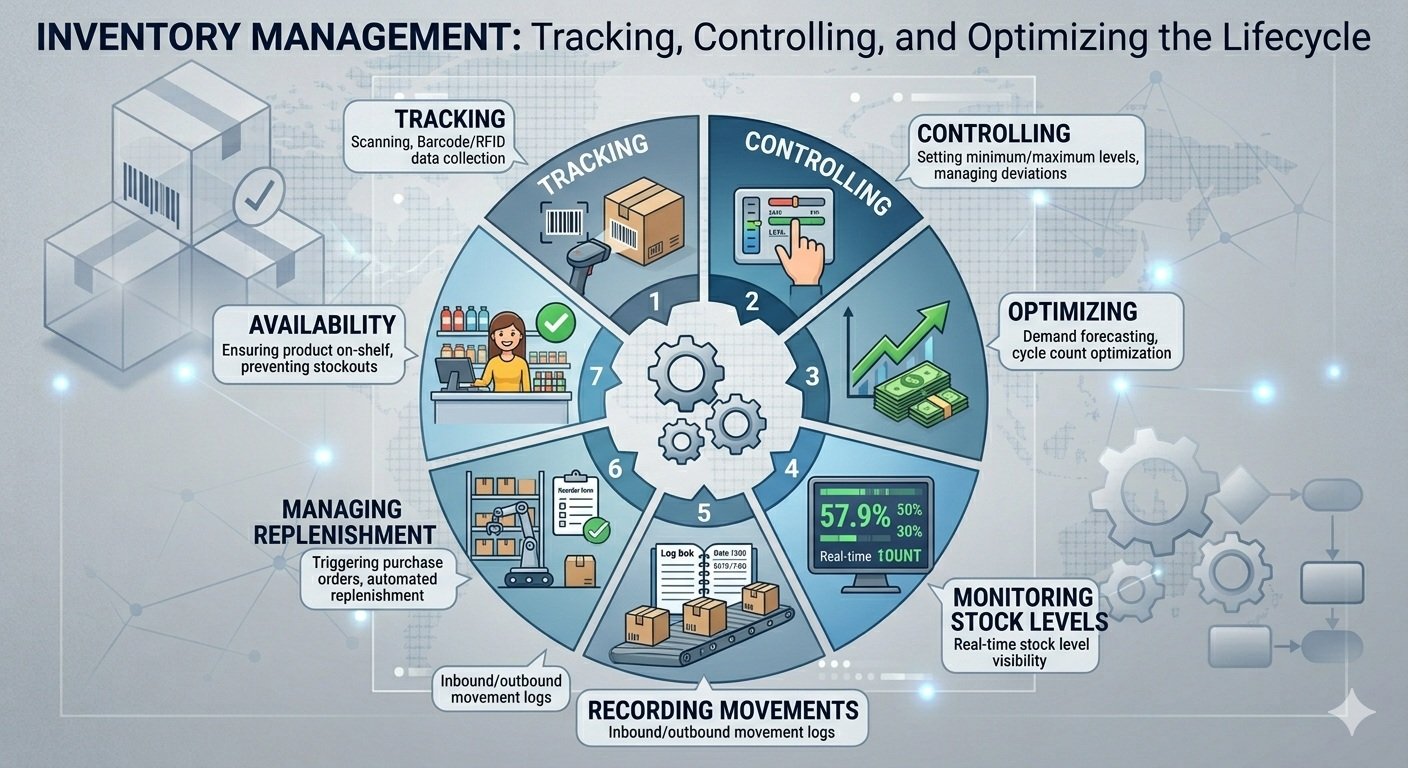
Inventory management refers to the process of tracking, controlling, and optimizing inventory throughout its lifecycle. It involves monitoring stock levels, recording inventory movements, managing replenishment activities, and ensuring that products are available when needed.
Effective inventory management enables businesses to maintain sufficient stock to meet demand while minimizing excess inventory and carrying costs. It helps organizations improve customer satisfaction, reduce waste, optimize cash flow, and support operational efficiency.
Modern inventory management systems provide visibility into stock quantities, warehouse locations, purchase orders, sales orders, and inventory movements. These capabilities allow businesses to make informed decisions regarding procurement, fulfillment, and inventory planning.
While technology plays an important role, inventory management ultimately depends on the quality and consistency of the processes that govern inventory-related activities.
Common Inventory Management Challenges
Many businesses experience inventory problems despite having inventory software in place. Stock discrepancies, missing inventory, unexpected shortages, and inaccurate inventory records remain common operational challenges.
One reason is that inventory transactions often involve multiple departments and stakeholders. Warehouse personnel, purchasing teams, operations managers, finance departments, and supervisors may all participate in inventory-related decisions. Without clearly governed processes, inconsistencies can easily emerge.
For example, inventory adjustments may be performed without proper authorization. Stock transfers between locations may occur without sufficient documentation. Damaged inventory may be written off without approval. Emergency requests may bypass established controls in the interest of speed.
While each individual exception may appear minor, the cumulative impact can be significant. Inventory inaccuracies affect purchasing decisions, financial reporting, customer fulfillment, and operational planning. Over time, weak controls create operational risk and reduce confidence in inventory data.
Why Inventory Visibility Alone Is Not Enough
Many organizations assume that implementing an inventory management system automatically solves inventory-related problems. While these systems improve visibility, they do not always guarantee that inventory processes are followed correctly.
A system may show that a stock adjustment occurred, but it may not enforce whether the adjustment received the appropriate approval. It may record that inventory was transferred, but it may not ensure that supporting documentation was reviewed. It may capture inventory transactions, but it may not prevent users from bypassing established business rules.
As businesses grow, these gaps become increasingly difficult to manage. More warehouses, more employees, more inventory movements, and more exceptions create a level of complexity that manual oversight can no longer effectively control.
This is where process governance becomes essential.
The Role of Process Governance in Inventory Management
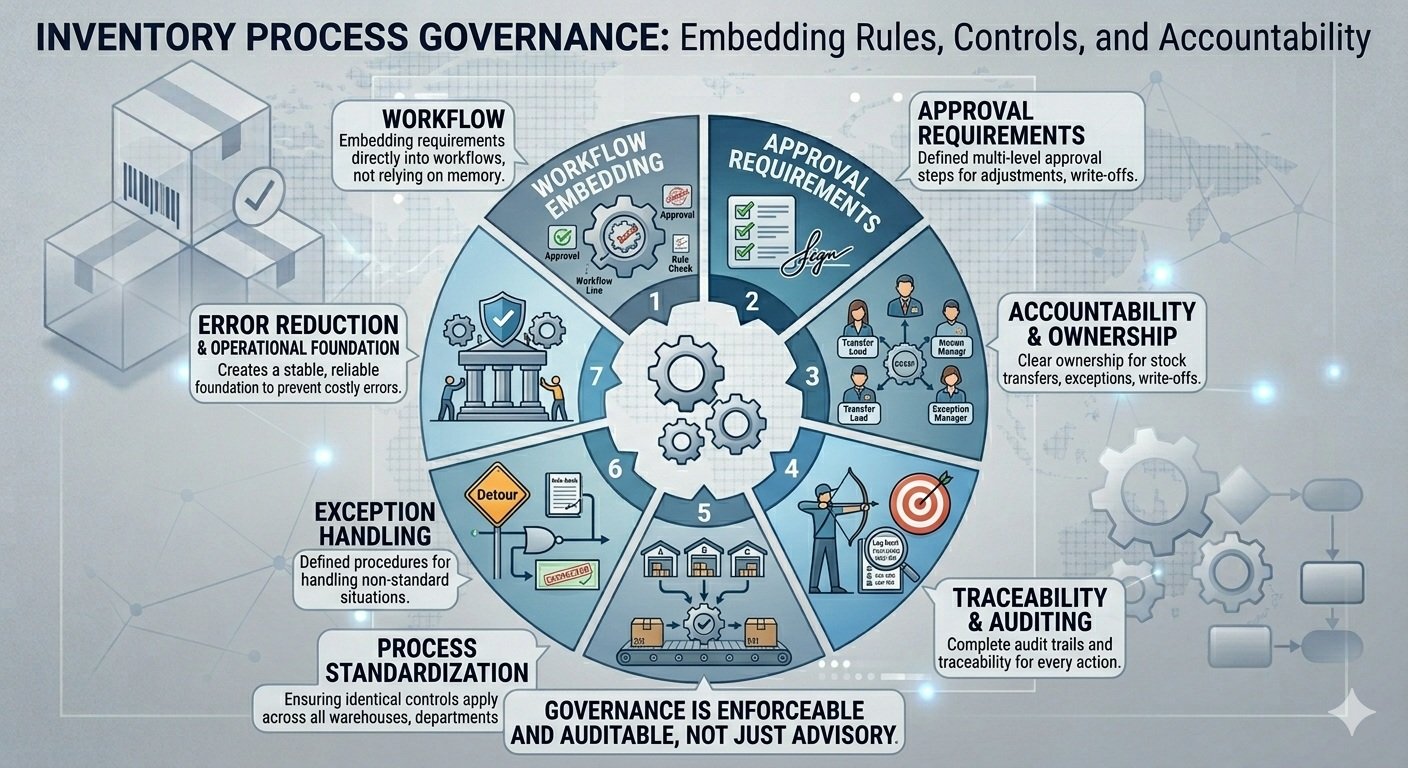
Process governance ensures that inventory activities follow predefined business rules, approval requirements, and control mechanisms. Rather than relying solely on employees to remember procedures, governance embeds those requirements directly into operational workflows.
Strong inventory governance helps organizations ensure that inventory adjustments receive proper approval before execution. It establishes accountability for stock transfers, inventory write-offs, cycle count variances, returns processing, and exception handling. Every action becomes traceable, auditable, and enforceable.
Governance also improves consistency across warehouses, departments, and locations. Instead of allowing each team to develop its own methods, organizations can standardize inventory processes and ensure that the same controls apply throughout the business.
This creates a stronger operational foundation and reduces the likelihood of costly inventory errors.
Why Inventory Control Becomes More Difficult as Businesses Scale
As organizations expand, inventory operations naturally become more complex. Additional warehouses, suppliers, products, locations, and personnel increase the number of transactions that must be managed every day.
At the same time, business leaders require greater visibility and accountability. They need confidence that inventory movements are legitimate, approvals are occurring correctly, and operational controls remain effective across the organization.
Without a structured governance framework, growth often introduces increased risk. Inventory leakage, unauthorized adjustments, process inconsistencies, and approval bypasses become more difficult to detect and prevent.
Organizations that scale successfully understand that inventory control is not simply a warehouse challenge. It is a governance challenge.
How APES Strengthens Inventory Management
While traditional inventory management systems focus on recording and tracking inventory transactions, APES (Automated Process Enforcement System) focuses on governing and enforcing the processes behind those transactions.
APES acts as a process governance and enforcement layer that works alongside existing inventory, ERP, warehouse management, and enterprise systems. Rather than replacing current systems, it helps ensure that inventory-related activities follow the organization's business rules and approval requirements.
For example, APES can enforce approval workflows for inventory adjustments, stock write-offs, warehouse transfers, returns processing, and exception requests before transactions are executed. It ensures that the right stakeholders are involved, the appropriate controls are applied, and every decision is recorded.
This creates stronger accountability, improved auditability, and greater confidence in inventory operations. Instead of relying on manual oversight, organizations can build inventory processes that are consistently governed and enforced across the business.
The result is not only better inventory management, but also reduced operational risk, improved compliance, and stronger organizational control.
Conclusion
Inventory management is about more than knowing how much stock is available. It requires organizations to establish reliable processes that govern how inventory is adjusted, transferred, approved, and controlled.
As businesses grow, maintaining inventory accuracy becomes increasingly dependent on process governance. Without proper controls, even the most advanced inventory systems can struggle to prevent inconsistencies, unauthorized transactions, and operational risk.
If your organization is evaluating its inventory controls, approval processes, or governance framework, now is the time to identify potential gaps before they become costly problems.
Grab your free APES Governance Assessment today and discover how stronger process governance can help your business improve inventory control, reduce operational risk, and build more accountable and scalable operations.